


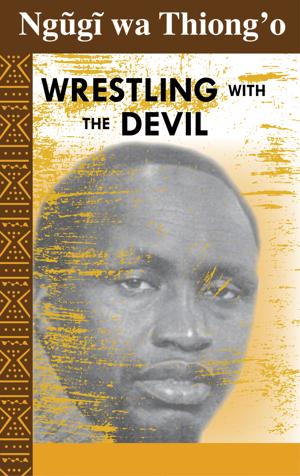
 Ngøgð wa Thiong’o is one of the most prolific writers from Africa. His first work, Weep Not, Child (1964), launched him as a pioneer African writer and made the literary world realise that writers in Africa were making fresh and original contribution to the world of literature. Since then, there was no stopping Ngøgð. The work was quickly followed by The River Between (1965) and A Grain of Wheat (1967), both of which confirmed Ngøgð as a writer of great ambition. The subsequent novels, Petals of Blood (1977) and Devil on the Cross (1980) had great impact around the world due to their powerful political messages. Besides writing novels, he is an internationally renowned playwright and literary critic, and has been an ardent advocate of writing in indigenous languages. His novels, A Grain of Wheat and Caitaani Mutharaba-inĩ (Devil on the Cross) were nominated among the best one hundred books of the twentieth (20th) century from Africa. Most of Ngøgð’s novels are published under the African Classics Series by East African Educational Publishers. Ngøgð has recently taken to issuing his autobiography in instalments. The first is Dreams in a Time of War (2010), in which he captures his upbringing and basic schooling before he joins secondary school. It is followed by In the House of the Interpreter (2013), which revolves around his time at the Alliance High School. Ngøgð’s years at the Makerere University are vividly captured in Birth of a Dream Weaver (2016). Wrestling with the Devil is the fourth in this series, and readers will find it resonating with Ngøgð’s earlier work, Detained: A Writer’s Prison Diary. Wrestling with the Devil begins half an hour before Ngøgð is released from detention on 12th December, 1978. In one extended flashback, he recalls the night, a year earlier, when armed police pulled him from his home and jailed him in Kenya’s Kamiti Maximum Security Prison, one of the largest in Africa. There, he lives in a prison block with eighteen other political prisoners, quarantined from the general prison population. In a conscious effort to fight back the humiliation and the intended degradation of the spirit, Ngøgð decided to write a novel on toilet paper. The novel later became his classic, Caitaani Mutharaba-inĩ. Wrestling with the Devil is an account of the challenges he faced as he wrote this novel, being under twenty-four-hour surveillance. He captures not only the excruciating pain that comes from being cut off from his wife and children, but also the spirit of defiance that defines hope. Ultimately, Wrestling with the Devil is a testimony to the power of imagination to help humans break free of confinement, which is truly the story of all art. Ngøgð wa Thiong’o was a Distinguished Professor of Comparative Literature and English at the University of California, Irvine, and an


Auteur(s): Thiong’O, Ngøgð Wa
Editeur: East African Educational Publishers
Année de Publication: 2026
pages: 178
Langue: Anglais
ISBN: 978-9966-565-89-1
eISBN: 978-9914--31015-3



